Beyond the Milligram: How UK Shoppers Should Actually Read a CBD Oil Label
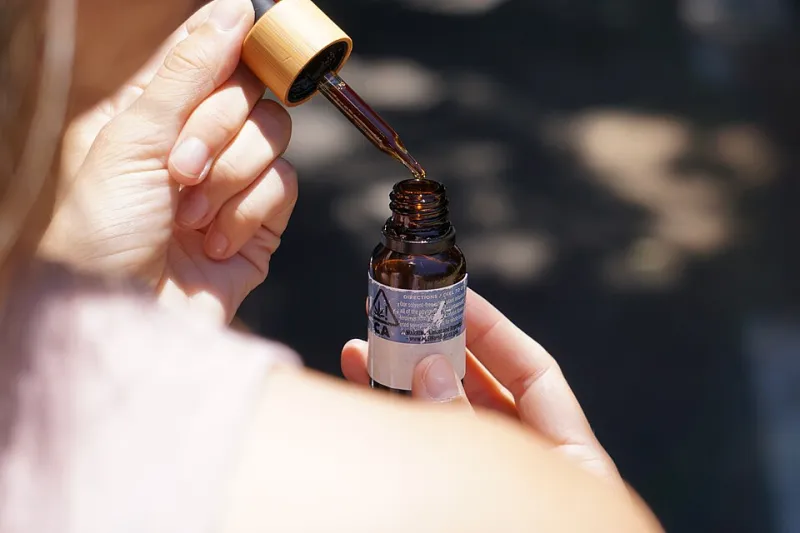
Photo: elsaolofsson, CC BY 2.0, via Wikimedia Commons
Walk into a health food shop in Leeds or scroll through a marketplace listing and you will meet a wall of numbers: 500mg, 1000mg, 2000mg, 10%, 20%. The layout implies that a bigger figure denotes a better product, and that the number printed on the front of the bottle describes what the oil actually is. Neither assumption survives much scrutiny. Milligrams per millilitre describes concentration and very little else. It says nothing about cannabinoid profile, carrier oil, batch verification or the volume of liquid you are paying for.
A ratio, not a strategy
Consider two bottles sitting side by side on a shelf. The first is a 10ml bottle labelled at 50mg per ml, which delivers 500mg of CBD in total. The second is a 30ml bottle at 20mg per ml, which delivers 600mg in total. The first is the stronger product drop for drop. The second contains more cannabinoid overall and will usually cost less per milligram. Describing either as the better buy without knowing how the customer intends to use it is guesswork dressed up as advice.
This is the trap the mg-per-ml figure sets. It is a useful specification, comparable to the alcohol by volume on a beer label, but it is not a summary of the product. Treating it as one leads shoppers to pay a premium for concentration they may not need, in a bottle that runs out faster than expected.
The three figures worth writing down
Before comparing prices, note these down.
- Total cannabinoid content. Multiply the mg per ml by the bottle volume in millilitres. This is the quantity you are actually buying.
- Servings per bottle. Check the stated serving size, typically a fraction of a dropper, and divide the total content by it. A 10ml bottle offering 0.2ml servings holds roughly fifty servings; a 30ml bottle holds around one hundred and fifty.
- Cost per 100mg. Divide the retail price by the total content and multiply by one hundred. This single figure exposes more marketing claims than any badge on the label.
Run those three calculations across a shortlist and the pricing landscape changes shape. Products that appear cheap at the point of sale often turn out to be the most expensive per milligram, and the reverse is just as common.
The carrier oil changes the arithmetic
CBD is suspended in a carrier, and the choice of carrier is not cosmetic. Medium-chain triglyceride oil, usually derived from coconut, is the most common in the UK market because it is comparatively neutral in taste and stable. Hemp seed oil appears frequently too, but it contains negligible cannabinoids of its own, so a product diluted in hemp seed oil may require a larger volume to deliver the same stated dose. Olive oil and other culinary carriers appear in smaller ranges.
The carrier also affects how the product behaves in the mouth and how easily the stated concentration can be measured out. A thick oil clings to the dropper; a thin one disperses quickly. Neither is a defect, but a brand that does not state its carrier clearly is withholding information that a buyer will notice the moment the bottle is opened.
Spectrum claims need specifics
Full-spectrum, broad-spectrum and isolate are widely used terms, and they are not applied with perfect consistency across the UK trade. A transparent producer will support the wording with figures rather than adjectives. Look for a stated cannabinoid profile listing CBD alongside CBDA, CBG, CBC and CBN where present, and a clear position on THC and THCA.
A broad-spectrum claim should be evidenced by a laboratory result showing tetrahydrocannabinol below the reporting limit of the test used. An isolate should show a single dominant cannabinoid with everything else at or near zero. Where a label uses the terminology but the accompanying report shows a full cannabinoid suite and no explanation, ask which document is correct.
What a batch certificate of analysis should contain
A certificate of analysis, or COA, is only meaningful when it relates to the specific batch in your hand. The essentials are straightforward:
- a batch or lot number that matches the packaging;
- cannabinoid potency determined by a recognised method, usually high-performance liquid chromatography;
- THC and THCA results with the limit of detection stated;
- heavy metals, including lead, cadmium, arsenic and mercury;
- pesticide screening against a defined panel;
- residual solvents where an extraction solvent has been used;
- microbiological results covering total aerobic count, yeast and mould, and specified pathogens;
- the testing laboratory's name, the date of analysis and evidence of accreditation, such as ISO 17025.
A certificate without a batch number, or one that cannot be tied to the packaging, is decorative rather than evidential. Many reputable brands publish reports behind a batch look-up tool, which takes the guesswork out of the exercise.
The UK context in brief
Cannabidiol sold as a food supplement in the United Kingdom sits within the novel food framework, and products intended for the market are expected to appear on the Food Standards Agency's public list. Appearance on that list is a registration position, not an endorsement of quality, and it should be read alongside the other documentation rather than instead of it.
Tetrahydrocannabinol remains a controlled substance, and consumer products are expected to sit at or below the reporting limits used by their laboratories. Reputable brands state this plainly. Equally, labels should avoid medicinal claims; CBD sold as a supplement is not a medicine, and wording that implies treatment of a condition is a compliance problem rather than a mark of confidence. Age restrictions and clear usage guidance belong on the pack.
Five questions to ask before checkout
- What is the total cannabinoid content of this bottle, and what is the cost per 100mg?
- Which batch will I receive, and can I see the certificate for it?
- What carrier oil is used, and is the full ingredient list published?
- Is the product full-spectrum, broad-spectrum or isolate, and what do the laboratory figures show?
- Is the product listed under the novel food framework, and who is the responsible UK entity?
Brands that answer these questions without hesitation tend to answer the harder ones too. Those that redirect to a generic certificate, or to a blog post explaining why batch testing is difficult, have told you something useful.
Where this leaves the shopper
None of this is an argument against high-strength products. A concentrated oil in a small bottle can be a sensible purchase for someone who wants a precise, small volume per serving and is content with the cost per milligram. The argument is against treating the milligram figure as a substitute for reading the rest of the label.
Strength is a specification. Transparency is the differentiator. A modest bottle with a matched certificate, a named carrier and a clear cannabinoid profile tells you far more about what you are buying than a large number printed in gold foil.