The Dryness Assumption: Moisture Evidence for UK CBD Supply Agreements

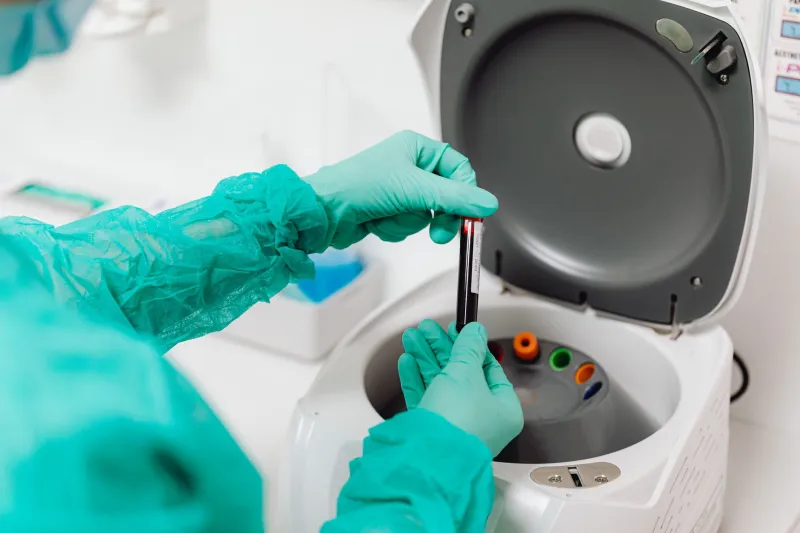
Photo: CBD oil laboratory moisture testing glassware Karl Fischer titration, via i.etsystatic.com
Moisture is rarely the first specification a UK CBD buyer checks. Potency, cannabinoid profile, solvent residues and contaminants usually take the attention. Yet an oil-based product can fail on water long before it fails on cannabinoids. The phrase ‘oil-based’ does not make a batch anhydrous, and it certainly does not make water irrelevant. In a supply agreement, dryness should be an evidenced property, not an assumption.
Why water finds a way into an oil system
Water can enter a CBD oil supply chain at several points: residual moisture in biomass, extraction and winterisation steps, washing or clarification, carrier oils, packaging, cleaning regimes, filling in humid conditions, or condensation during transit. In a hydrophobic matrix, water may sit as dispersed droplets, collect at interfaces, or migrate into the headspace. The result is not always visible, and a clear bottle on a dispatch pallet is not proof of a dry batch.
Two measurements are often confused. Moisture content describes how much water is present. Water activity describes how much of that water is available to support microbial growth and chemical change. They are related but not interchangeable. A product can report a low moisture content while still having localised areas of higher water activity, particularly where water is unevenly dispersed or where an emulsion is beginning to separate.
For UK trade buyers, the distinction matters commercially. A specification that names only moisture content may miss the risk that matters for shelf life. A specification that names only water activity may not capture the total water load entering the product. The contract should be clear about which property is being controlled, why, and at which point in the process it is measured.
The consequences are commercial, not merely analytical
Water in an oil system can produce cloudiness, sediment or a hazy appearance that consumers read as a quality defect. It can encourage emulsion instability in products that contain any aqueous phase, and it can create interfacial conditions in which micro-organisms find a foothold. It can also contribute to flavour drift, oxidation and a shorter effective shelf life. None of these outcomes is necessarily a cannabinoid failure, but each can generate complaints, returns and pressure on retail relationships.
The risk is higher where products are stored warm, transported through seasonal temperature swings, or filled into containers that are not fully dry before use. Condensation in headspace is difficult to see and easy to overlook. A batch that leaves a warehouse within specification can arrive with a moisture problem if the transit and storage conditions have not been considered in the agreement.
Interrogating the moisture data
A certificate of analysis should do more than report a pass or fail against an unspecified limit. For moisture content, ask which method was used. Karl Fischer titration is selective for water and is generally more informative for oils than loss on drying, which can also capture volatile materials and therefore overstate or misrepresent the water fraction. For water activity, ask how the sample was prepared, whether the measurement was taken at a controlled temperature, and how the result relates to the product format.
The buyer should also ask where the sample came from. A bulk tank sample, a drum sample, a pre-fill line sample and a finished bottle sample are not interchangeable. Composite sampling can hide variation between containers or between the top and bottom of a vessel. If the supplier cannot state the sampling point, the result is difficult to rely on in a dispute. The same applies to the laboratory: accreditation, method validation, limits of detection and quantification, and replicate results all affect how much weight the data can bear.
A useful CoA will state the result, the method, the unit, the sampling point and the specification limit. A line that says only ‘moisture: compliant’ is not evidence. It is an assertion.
Setting specification limits that mean something
There is no single moisture limit that can be copied safely across every CBD oil format. An anhydrous carrier-oil product, a broad-spectrum extract in MCT, a water-containing emulsion and a finished tincture will not share the same risk profile. Limits should be derived from product development, stability data and a documented understanding of the intended shelf life. They should also distinguish between bulk release and finished-product release.
An illustrative limit may be useful in early supplier discussions, but it should not become a contract term without justification. The buyer should ask what evidence supports the chosen figure, how close routine production sits to that figure, and what happens when a result falls outside it. A limit set so tight that ordinary variation triggers constant retests is not a quality system; it is a dispute generator. A limit set so loose that it cannot detect a meaningful change is not a control either.
Water activity limits deserve the same discipline. Where a product is genuinely anhydrous, the rationale for measuring water activity should still be documented. Where an emulsion is involved, water activity may be the more relevant release parameter. The contract should not blur the two.
Writing the clause into the supply agreement
The moisture clause should define the property, the method, the laboratory, the sampling plan and the acceptance decision. It should say whether the result applies to bulk, finished goods or both, and whether retained samples will be kept for the agreed shelf-life period. It should also address retest rights, dispute resolution and the consequences of a failed result, including segregation, rework, rejection and corrective action.
Storage and transit conditions belong in the same conversation. If the specification is based on a sample taken at dispatch, the agreement should explain how the product will be protected from condensation and humidity during carriage and storage. Packaging integrity, filling conditions and container dryness are part of the evidence chain, not separate housekeeping matters.
Red flags for UK buyers
Be cautious when a CoA reports moisture without a method, when loss on drying is used without justification for an oil, or when water activity is reported without a clear link to product format. Be equally cautious when results sit consistently just inside a limit, when bulk and finished results diverge without explanation, or when the supplier cannot describe the sampling plan. These are signs that dryness is being assumed rather than controlled.
The practical response is not to demand impossible precision. It is to require a defensible specification, a named method, a stated sampling point and a clear release decision. In UK CBD trade, water is a small component with a long reach. It deserves a line in the contract, a place in the batch file and a question in every supplier review.