Flags on Labels, Facts in Files: Auditing CBD Origin Claims for UK Retail
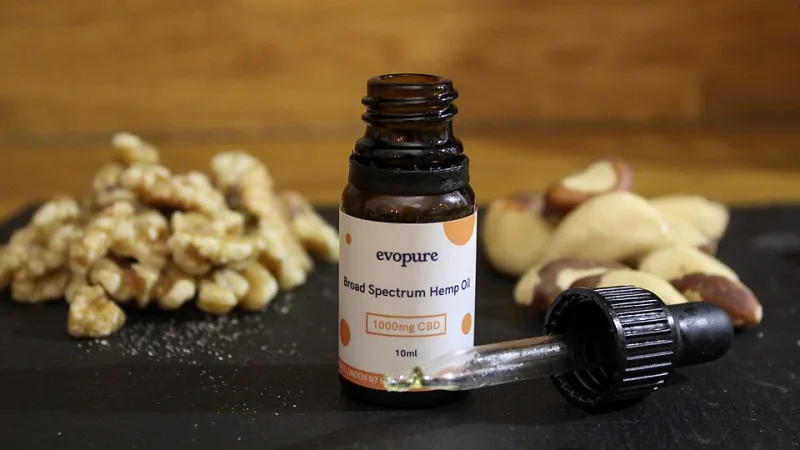
Photo: Evopure, CC BY 2.0, via Wikimedia Commons
A union flag on a CBD bottle is doing a lot of commercial work. It suggests local manufacture, familiar oversight and a shorter supply chain. For a UK retailer, those associations can be useful. For a trade buyer, they are also a prompt for evidence. Origin claims sit at the junction of consumer protection, contract drafting and quality assurance, and they deserve more scrutiny than a line of label copy.
This is not a legal opinion, and it does not replace advice on the Consumer Protection from Unfair Trading Regulations or on customs origin. It is a practical framework for UK CBD buyers who need to decide whether a supplier's origin language is supported by the batch file in front of them.
Why origin claims attract scrutiny
UK consumer law requires commercial claims to be truthful and not misleading. A statement such as 'Made in Britain' or 'British CBD' can influence a shopper's decision, so it should be capable of substantiation. Trading Standards and the Advertising Standards Authority have long taken an interest in origin claims that imply more domestic production than actually occurs.
For CBD, the risk is compounded by the structure of the supply chain. Cannabidiol extract is a globally traded ingredient. Biomass may be grown in one country, extracted in another, purified in a third and formulated in the UK. A finished bottle can therefore contain material that has crossed several borders before it reaches a filling line in England, Scotland or Wales. That does not make a UK claim automatically wrong. It does mean the claim needs a precise basis.
Four places where 'origin' can attach
Trade buyers often talk about origin as if it were a single fact. In practice, it can refer to at least four different things:
- Agricultural origin: where the hemp biomass was grown.
- Processing origin: where extraction, winterisation, decarboxylation or purification took place.
- Manufacturing origin: where the finished oil was formulated, blended and filled.
- Commercial origin: where the brand owner or importer is based.
A product can be British in one sense and imported in another. 'Bottled in Britain' is a narrower statement than 'Made in Britain', and 'UK-grown hemp' is narrower still. The problem arises when label language blurs these categories. A bottle filled in the UK from imported isolate is not the same proposition as a bottle made from UK-grown biomass, even if both pass through a domestic filling line.
Substantial transformation is the trade test to watch
In customs and trade discussions, origin is often linked to the concept of last substantial transformation. The question is whether the processing in a country changed the goods in a meaningful way, rather than simply repackaging or minor handling. Tariff classification, value added and the nature of the processing can all matter.
Filling a bottle is unlikely, on its own, to turn an imported CBD extract into a UK-origin product for every purpose. Dilution in a carrier oil may or may not be substantial depending on the circumstances and the rules being applied. Extraction from biomass is a more obvious processing step, but even then the buyer should ask where it happened and how the supplier characterises it.
This is why a supplier's origin statement should be tied to a described process, not just a country name. Ask for the sequence of manufacturing steps and the location of each. If the answer is 'formulated and filled in the UK from imported extract', that is a usable statement. It may be a perfectly good selling point. It is simply a different claim from 'made in the UK from British hemp'.
A practical checklist for UK trade buyers
Origin due diligence should be batch-linked wherever possible. A generic certificate covering a supplier's whole range is weaker than a record that ties a specific lot to a specific production run. The following items are a sensible starting point:
- Batch-level origin statement. Ask the supplier to state, in writing, the country of origin of the CBD extract and the country where final formulation and filling took place.
- Process map. Request a short description of the manufacturing steps, including extraction, purification, dilution, blending and filling, with the site location for each.
- Bill of materials. Identify carrier oils, flavourings, terpenes and any other ingredients, together with their origins if a claim depends on them.
- Supplier declarations. Obtain declarations from the extract supplier and, where relevant, the biomass supplier. Check that they are dated and signed.
- Traceability records. Look for lot numbers that connect incoming extract to finished bottles, plus dispatch and receipt records.
- Label substantiation file. Keep a copy of the approved artwork, the claim being made and the evidence relied on. Review it when the artwork or supplier changes.
- Contract protections. Include warranties that origin statements are accurate, a notification duty if sourcing changes, and audit rights that allow you to inspect relevant records.
- Site verification. For higher-risk or higher-volume ranges, consider a site visit or a third-party audit that covers receiving, blending, filling and record-keeping.
Questions to put in writing
The wording matters. Broad questions invite broad answers. A buyer can ask more precise ones:
- Was the CBD extract imported? If so, from which country and from which supplier?
- Where was the biomass grown, and can that be traced to the extract lot?
- Which legal entity performed extraction and purification, and at which site?
- What exactly happens at the UK site: decanting, dilution, blending, filling or something more?
- Does the finished product meet the supplier's own definition of UK origin? What is that definition based on?
- Which ingredients in the finished bottle are not UK-origin, and how is that reflected in label copy?
- If the claim is 'British', does it refer to the brand, the company, the biomass or the manufacturing process?
Label language that survives scrutiny
Clear qualifiers are not a weakness. They are a form of transparency that trade customers and retailers can defend. 'Bottled in the UK from imported CBD extract' is less romantic than a flag, but it is precise. 'Formulated and filled in the UK' describes a real activity without implying that the extract was grown or processed domestically. 'UK-grown hemp' should be reserved for products where the biomass origin is documented.
Retailers should also watch for implied claims. A union flag, a British place name in the brand and phrases such as 'homegrown' can combine to create an impression that the extract is domestic even when the small print says otherwise. The test is not whether each word is technically true in isolation, but whether the overall presentation is misleading.
The retailer's due diligence file
For a UK retailer, the safest approach is to keep an origin file for each CBD range. It should contain the supplier's declarations, the process map, the label artwork and a dated note of the evidence reviewed. The file should be updated when the supplier changes its extract source, its filling site or its label copy. Staff who handle customer questions should know which claims are approved and which are not.
Origin is ultimately a chain-of-custody question. The most credible suppliers are not necessarily those with the loudest flag. They are the ones who can explain where each step happened, show the records that support the statement and use label language that matches the evidence. For UK trade buyers, that is a more useful standard than patriotism alone.