Storage You Inherited: Auditing a Third-Party Warehouse in UK CBD Supply
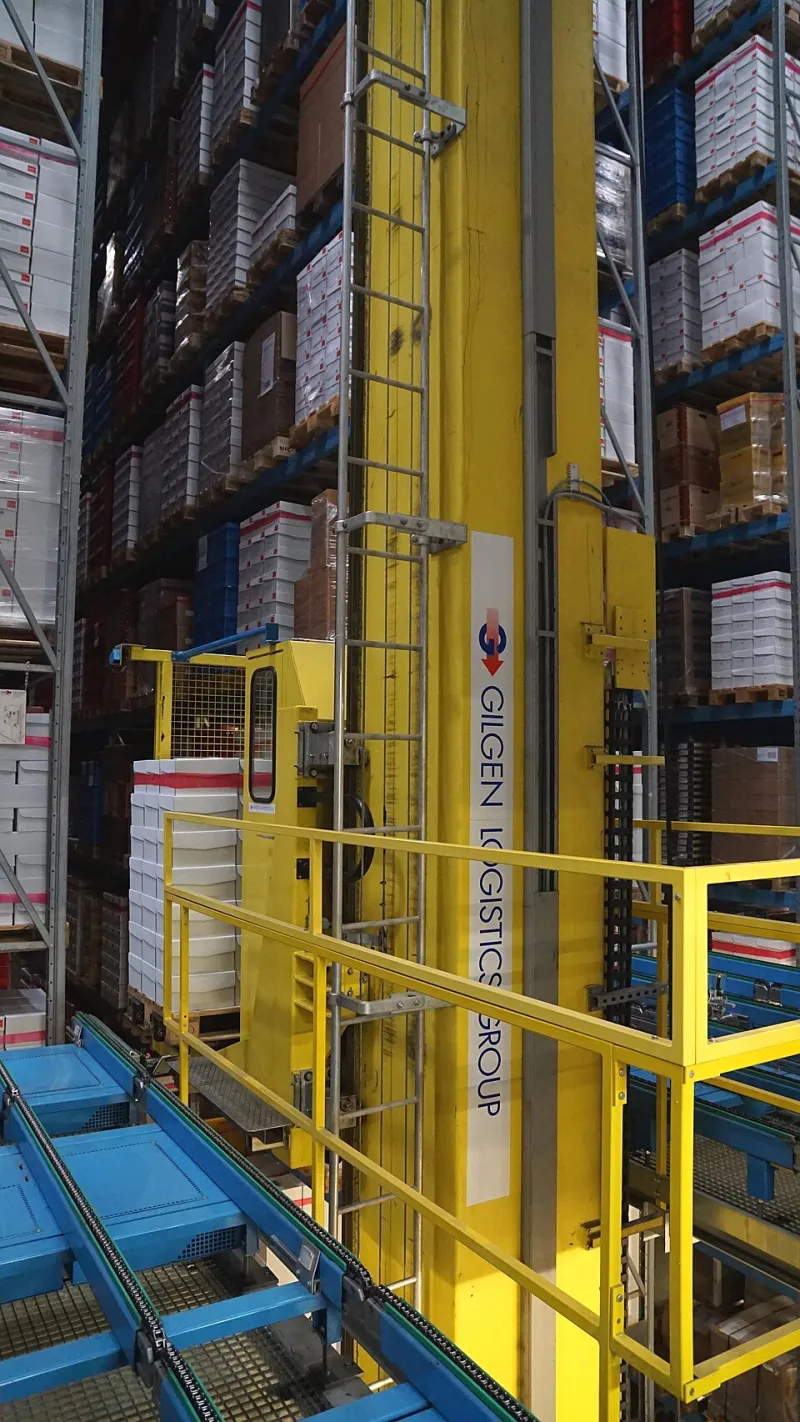
Photo: Logistiksysteme, CC BY-SA 4.0, via Wikimedia Commons
A trade buyer will typically visit the extraction site, ask for the batch file, review the certificate of analysis and query the carrier oil. The same buyer will often accept a third-party logistics provider on the strength of a rate card and a warehouse address. The pallet then sits in a shared facility for four months, and nobody asks what happened to it there.
Storage is a supply chain node, not a waiting room. Temperature, light, handling and stock rotation all act on a CBD oil after it has been filled, and the evidence that they acted benignly has to be collected while the goods are in storage, not reconstructed afterwards.
Start with the contract, not the racking
The audit begins before the visit. The storage agreement should state whether the goods are held in a dedicated area or commingled, what else is stored in the same facility, and whether the provider has the right to move stock between sites. It should grant a right to audit, ideally both announced and unannounced, and oblige the provider to supply monthly data rather than only on request.
Lot traceability at pallet, case and unit level should be specified, along with the provider’s liability for damage, the insurance position, and the notice period for a change in storage conditions. A 3PL that cannot say which clients share its ambient chamber is not necessarily unsuitable, but the buyer should know the answer before the first pallet lands.
Segregation and access control
On site, the first observation is physical. Are quarantined or rejected goods held in a defined area with controlled access, or merely labelled? Are status labels applied at pallet level in a way that a picker cannot mistake? Who holds the keys to the quarantine cage, and is that access logged?
CCTV retention is worth asking about, not because footage is routinely reviewed, but because it exists if a discrepancy needs tracing. A facility that cannot produce footage from three weeks ago has a shorter memory than the supply chain requires.
Pest control and premises
Pest control records are among the most revealing documents in any warehouse audit, because they are generated by an external contractor and are difficult to fabricate convincingly. Ask for the last four service reports, the bait map, and the trending summary. Look for repeated activity in the same zone, for open recommendations that have not been closed, and for proofing defects that were noted and deferred.
Alongside pest control, review the cleaning schedule, the spill procedure and the condition of the fabric of the building. A leaking roof above a pallet of amber bottles is a batch risk, not a maintenance matter.
Temperature: mapping, logging and escalation
A single wall-mounted thermometer is not temperature evidence. Ask whether the chamber has been temperature-mapped, where the logger is positioned relative to the stock, and whether the logger is calibrated. Request the calibration certificates and a download of the raw data covering the period your stock was held, not a monthly summary spreadsheet.
Equally important is what happens when the alarm sounds. Who receives it, at what hour, and what is the documented response? An alarm that rings in an office empty from Friday evening to Monday morning is a control in name only. For oil-based products, light exposure and humidity are also worth recording, particularly where stock is held near glazing or in a chamber shared with goods that generate moisture.
Rotation, picking and stock accuracy
First-expired-first-out is a system behaviour, not a good intention. Ask how the warehouse management system enforces it, and test the answer by asking to see a recent pick for a short-dated line. Picking accuracy should be reported as a monthly figure with the underlying error log, and cycle counts should reconcile against the buyer’s own records.
A stock reconciliation that shows a persistent variance of a few cases a month is not necessarily theft; it may be mis-picks, damage write-offs or unrecorded returns. The point is that the explanation should exist.
Damage and deviation logs
The damage log is where storage becomes visible. It should record date, batch, quantity, cause, photographs, the person who authorised write-off, and the disposition. A log with three entries a year in a busy facility is not evidence of care; it is evidence of a log that is not being kept.
Deviations should be linked to a corrective action. If a pallet was left on the dock for six hours in July, the record should show what was done about it, including any assessment of the goods before they re-entered saleable stock.
Building the evidence pack
A workable monthly pack includes: logger downloads with calibration status, pest control reports and open actions, damage and deviation registers, stock reconciliation, pick accuracy figures, and a list of any goods moved between sites. At the annual visit, the buyer should download logger data on site rather than accept a file sent later, spot-check batch codes against the buyer’s own records, and walk the quarantine area rather than view it from the doorway.
The purpose is narrow and worth stating plainly: to demonstrate that storage has not quietly altered the batch. Extraction records and certificates of analysis say what was made. The warehouse file says what happened next.