The Container Is a Component: Packaging Migration and Closure Integrity in UK CBD Trade

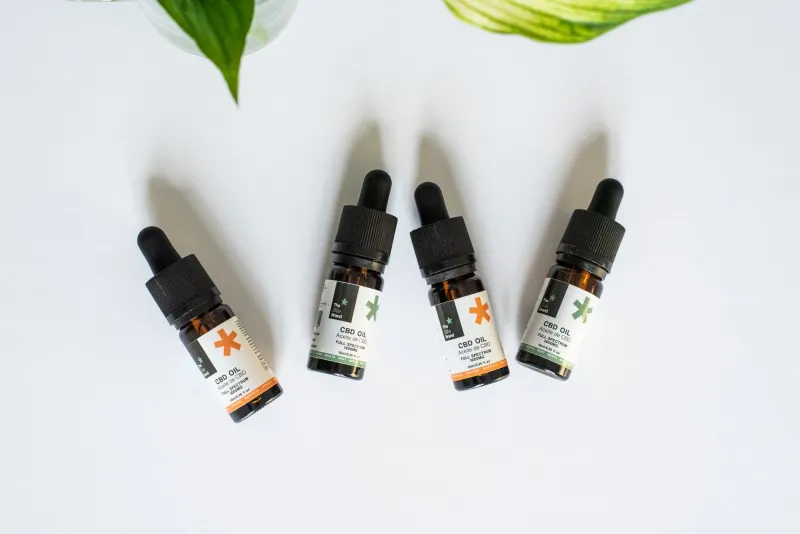
Photo: elsaolofsson, CC BY 2.0, via Wikimedia Commons
Most UK CBD trade buyers now interrogate cannabinoid potency, carrier oils, extraction routes and batch documentation with reasonable rigour. Packaging, by contrast, is frequently treated as a purchasing detail rather than a quality attribute. The bottle arrives, the dropper fits, the closure clicks, and the batch is released. That sequence leaves a significant gap.
Primary packaging is not external to the product. It is the material system that holds the formulation for the whole of its shelf life. Glass, plastic, elastomer teat, closure liner, tamper-evident band, label adhesive and printing inks all sit in prolonged contact with a formulation that may contain cannabinoids, terpenes, carrier oils, flavourings and ethanol. Over weeks and months, those materials can interact. A batch specification that stops at the fill weight and cannabinoid concentration is therefore incomplete.
Packaging belongs in the batch specification
For trade buyers, the practical question is not whether packaging looks acceptable on arrival. It is whether the chosen container and closure system has been assessed against the actual formulation under the intended storage conditions. That means defining the primary packaging in the same way as any other critical input: material type, supplier, grade, colourant, lubricant, liner composition and, where relevant, the closure mechanism.
A useful starting point is a packaging bill of materials for each stock-keeping unit. This should identify the bottle or container resin or glass type, the dropper teat and stem material, the closure polymer, any liner or wad, and the adhesives used for labels or tamper-evident seals. Trade buyers should also ask whether the packaging supplier and the filler have assessed the combination as a system, rather than approving each component in isolation.
The compatibility and migration data to request
Migration and compatibility data need not be presented as a single document, but the supplier should be able to demonstrate that the question has been asked. Buyers should request compatibility reports or migration testing carried out with the finished formulation, or with a justified simulant that reflects its contact time and temperature. Accelerated stability data are useful, but they do not replace a consideration of packaging interactions.
Where available, extractables and leachables information can help. So can declarations covering the composition of elastomer and plastic components, particularly for the dropper teat and closure liner, which are often overlooked. The buyer should also confirm packaging lot traceability, so that a container or closure issue can be linked to the batches it affected. A supplier that cannot identify the packaging lot has limited ability to support a recall or investigate a complaint.
This is also where vague assurances become unhelpful. Statements such as 'food grade' or 'pharmaceutical grade' do not, on their own, tell a buyer how a closure will behave in contact with a CBD oil containing limonene, ethanol or medium-chain triglycerides. The relevant question is compatibility with the specific formulation, not the general reputation of a material category.
Child-resistant and tamper-evident performance is a system property
Child-resistant closures are frequently specified by reference to a standard, most commonly BS EN ISO 8317 for reclosable packages and BS EN 862 for non-reclosable packages. Those standards are important, but a test report for a closure alone is not sufficient. The performance depends on the bottle, the closure and the way they are assembled and used.
UK trade buyers should ask for child-resistant test reports that cover the actual container and closure combination, not a generic cap. They should also consider adult usability, including for older consumers, and whether the closure remains effective after repeated opening and reclosing. Child-resistant does not mean child-proof, and no packaging system removes the need for clear labelling and safe storage advice.
Tamper evidence is a separate requirement. A shrink band, induction seal, breakable ring or other tamper-evident feature should be assessed for consistent application and for whether it remains intact through distribution. For trade buyers, the practical test is whether the system reliably shows interference without making legitimate opening unreasonably difficult. Whether a particular child-resistant or tamper-evident feature is legally mandatory depends on the product's classification and route to market; where the position is ambiguous, a responsible buyer should specify performance rather than rely on ambiguity.
Food-contact status is not a blanket approval
Food-contact declarations are often presented as evidence that a bottle or closure is suitable for CBD oil. They are not a substitute for formulation-specific compatibility work. UK food-contact materials rules, including retained Regulation 1935/2004 and related material-specific measures, address materials intended to come into contact with food. CBD oil may not fall within that framework in the same way as a conventional food, and a food-contact declaration will not necessarily assess interaction with cannabinoids, terpenes or other formulation components.
A food-contact declaration can still be useful evidence about the base material. It should not be treated as a complete answer. Buyers should ask what the declaration covers, which conditions of use were assumed and whether the packaging supplier has considered the finished CBD formulation. If the answer is limited to food simulants, that limitation should be recorded and assessed.
Writing packaging into the supplier agreement
The strongest quality assurance is contractual. A supply agreement should include a packaging specification annex that names approved components, manufacturers and grades. It should require written notification and buyer approval before any change to resin, elastomer, liner, closure design, adhesive or printing ink. Change control is particularly important because a visually identical closure can differ materially in composition.
The agreement should also require access to compatibility and migration data, child-resistant and tamper-evident test reports, packaging lot traceability and retained samples. Non-conformance procedures should cover packaging defects as well as fill defects. Where appropriate, the buyer should reserve audit rights over the filling and packaging processes, and require notification of any regulatory or standards change affecting the components.
A practical approval sequence
A defensible packaging approval process can be kept simple. First, define the container and closure system in the specification. Second, obtain the packaging bill of materials and supplier declarations. Third, review compatibility and migration evidence against the finished formulation and intended storage conditions. Fourth, confirm child-resistant and tamper-evident performance on the assembled pack. Fifth, record the approved components and change-control obligations in the supply agreement. Sixth, retain samples and monitor complaints for signs of leakage, swelling, softening, discolouration or closure failure.
The container is not a passive accessory. In UK CBD trade, it is part of the product and part of the batch record. Buyers who treat packaging as a specification item, rather than a purchasing afterthought, are better placed to protect product integrity, meet their own due diligence obligations and resolve problems before they reach the shelf.