Dating the Bottle: How UK CBD Stock Ages, and What an Honest Expiry Policy Looks Like
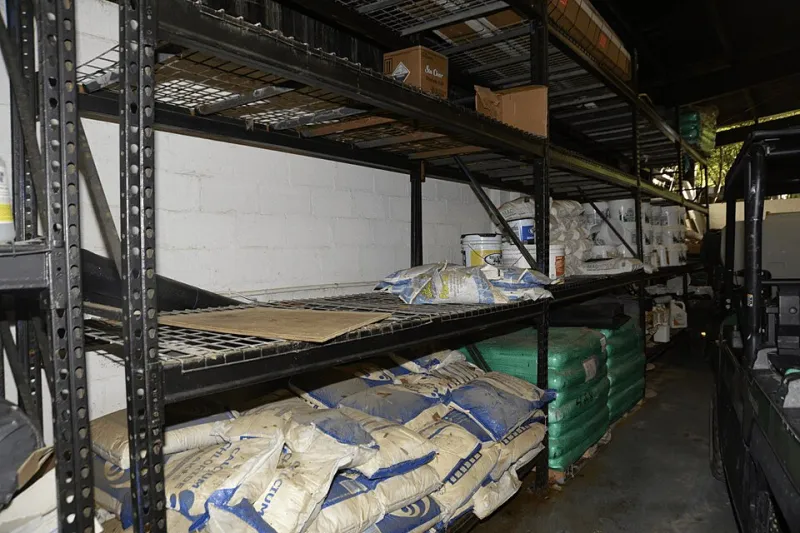
Photo: Federal Bureau of Investigation, Public domain, via Wikimedia Commons
A pallet of CBD oil that arrives in good order can still lose value while it sits still. Cannabinoids drift, oils oxidise, labels fade, and the date printed on the carton quietly converts stock into a liability. For UK wholesalers, distributors and retailers, shelf life is not an administrative detail bolted onto a product record; it is a supply-chain variable that can be managed, priced and, where necessary, negotiated.
The clock starts before the bottle is filled
Shelf life is usually quoted for the finished product, but much of it is consumed upstream. Biomass may be held before extraction; bulk extract may sit in a tank awaiting formulation; filled units may wait for labels, for QC release or for a container slot. Each stage exposes the material to light, warmth and oxygen. A supplier who quotes twenty-four months from fill date while holding extract for six months before filling is offering a materially different proposition from one who quotes the same figure with a short pre-fill dwell time. Buyers should ask for the fill date, not only the expiry date, and should treat the gap between the two as a quality indicator in its own right.
What actually changes in a stored oil
Three things tend to move. The cannabinoid profile is the most closely watched: CBD can convert to other cannabinoids over time under adverse conditions, and THC content, where present at trace levels, requires monitoring to remain within permitted limits. Terpenes are more volatile still and are typically the first thing a customer notices as the aroma flattens. The carrier oil itself oxidises, producing off-flavours and raising peroxide values long before any cannabinoid figure looks troubling. Packaging matters here: amber or opaque glass, low headspace, airless pumps and nitrogen flushing all slow the process, though none stops it.
Where a shelf-life figure comes from
A defensible expiry date rests on stability data, whether real-time or accelerated. Accelerated studies — commonly run at elevated temperature and humidity — give an early indication of degradation pathways; real-time studies confirm them. A credible file will show what was measured, at which intervals, and in which packaging format, because a figure generated in one container does not automatically transfer to another. Where a supplier cannot produce such data, the date on the carton is an estimate dressed as a specification, and buyers should price accordingly.
Storage in a British warehouse and a British shop
UK conditions are gentler than many, but not uniform. A mezzanine level in an unairconditioned distribution centre can exceed thirty degrees during a July heatwave, and a stockroom radiator can undo months of careful handling. Guidance typically centres on keeping stock below 25°C, away from direct sunlight and in low-humidity conditions. Winter brings its own risk: condensation on cartons moved from cold vehicles into warm premises. Practical controls include temperature logging in storage areas, rotating stock so older batches leave first, and keeping retail units off south-facing window displays, where both heat and ultraviolet light do damage quickly.
Best before, use by and retest dates
Retail food labelling in the UK distinguishes between a 'best before' date, which concerns quality, and a 'use by' date, which concerns safety. CBD oils are generally not microbiologically high-risk products and are usually marked with a best-before date; a supplier proposing a use-by date should be able to explain the hazard analysis behind it. Bulk material sold trade-to-trade often carries a retest date instead — a point at which the material should be re-examined rather than declared unfit. Confusing the three causes real problems at the point of sale, particularly when a retailer's own systems assume a fixed rule.
The paper trail a retailer should keep
Records need not be elaborate, but they should be consistent. A workable minimum includes the batch number and fill date for every delivery; the certificate of analysis matched to that batch; storage temperature records for the stockroom; a log of any markdowns or transfers; and the date on which stock was withdrawn. These records do two things: they allow a faulty batch to be traced quickly, and they demonstrate, if challenged, that reasonable care was taken.
Short-dated stock: move it, don't hide it
Every trade eventually holds stock it cannot sell at full margin. Short-dated units can be sold honestly at a reduced price, transferred to a busier outlet, offered in bundle deals with clear date disclosure, or returned under an agreed terms-of-trade clause. What should not happen is silent mixing of older units into fresh deliveries. Retailers who discover short dates on receipt should raise them at once; suppliers who routinely ship them without notice should expect the relationship to shorten accordingly.
Expired stock and the temptation to extend
Once a product passes its date, the temptation is to reason that oil does not spoil overnight. It may not, but the product is no longer covered by the specification it was sold against, and selling it is difficult to defend on either compliance or reputational grounds. Quarantine it, record the disposal or return, and use the event to review rotation and ordering patterns. Recurring expiry is usually a buying signal problem rather than a storage failure.
Writing the policy down
A short written shelf-life policy — covering minimum remaining shelf life on delivery, storage conditions, rotation rules, markdown practice and withdrawal triggers — is one of the cheapest transparency measures available. It turns a vague promise into a testable commitment, and it gives both sides of a trade relationship a shared reference point when a date, inevitably, becomes inconvenient.