The Unlisted Aromatics: Terpene Due Diligence for UK CBD Wholesale

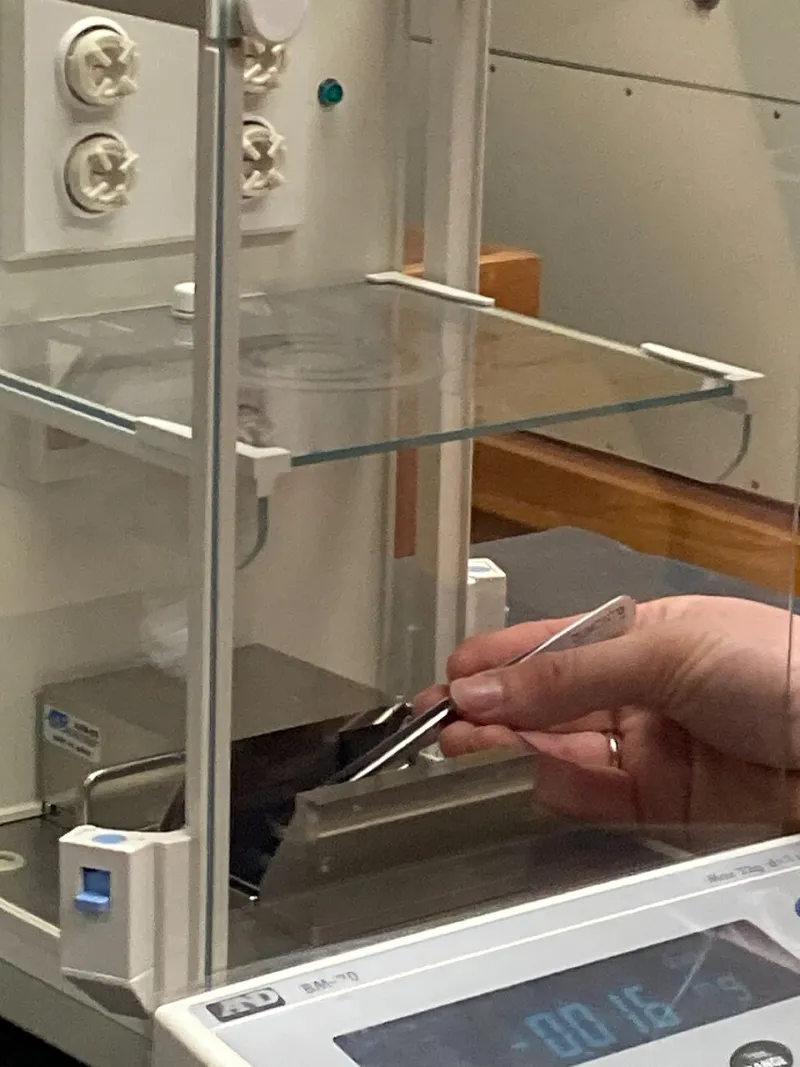
Photo: GC-MS chromatogram laboratory technician analysing terpene profile cannabis oil, via s3.divcom.com
A cannabinoid potency certificate is often treated as the central document in a UK CBD transaction. It tells the buyer how much CBD, CBDa, THC and perhaps a handful of minor cannabinoids are present. That information matters, but it is not a complete description of the bottle. Terpenes, the volatile aromatic constituents of the plant matrix, sit outside the standard cannabinoid panel. When they are omitted from the specification, the buyer is left with a gap between what is tested and what is actually supplied.
Why a potency panel is only part of the record
A cannabinoid panel quantifies selected target compounds. It does not describe the volatile fraction, and it does not show whether the aromatic profile has been preserved, altered by distillation, fortified with added terpenes or degraded during storage. Two oils with the same CBD content in milligrams per millilitre can differ markedly in sensory character, oxidative stability and batch consistency. For a UK retailer or wholesaler, those differences can surface later as customer complaints, inconsistent product experience or difficulty defending a provenance claim.
Terpene data should not be treated as a substitute for cannabinoid testing. It is a complementary record. The useful question for a trade buyer is not whether terpenes are more important than cannabinoids, but whether the certificate pack describes the product with sufficient breadth for the commercial risk being taken.
What terpene profiles can and cannot evidence
A terpene profile is typically produced by gas chromatography, often with mass spectrometry or flame ionisation detection. It reports individual volatile compounds and their relative abundance. In a well-run supply chain, that data can support several limited inferences.
First, it can offer clues about extraction and downstream processing. Carbon dioxide extraction, ethanol extraction, hydrocarbon extraction and short-path distillation do not all preserve the volatile fraction in the same way. A profile that is unusually depleted in monoterpenes may be consistent with heat exposure or aggressive distillation, though it is not proof of either. The profile should be read alongside the process description, not in isolation.
Second, it can help indicate storage history. Monoterpenes such as limonene, myrcene and pinene are relatively volatile and susceptible to oxidation. A batch that shows unexpected depletion, or a shift in the ratio between monoterpenes and sesquiterpenes, may warrant questions about headspace, temperature, light exposure or age. Again, the profile is a flag for enquiry rather than a standalone verdict.
Third, it can assist authenticity checks. Added terpenes, botanical blends or inconsistent source materials can produce profiles that do not fit the supplier’s declared process. Natural variation is real, however, and a single profile cannot prove botanical origin. The sensible use of terpene data is comparative: against a reference lot, against previous batches, against the declared formulation and against the supplier’s own specification.
Fourth, it can support batch consistency. If a buyer records marker compounds and their ratios across several lots, the resulting trend can be more informative than a single pass or fail result. Consistency is particularly important for retail clients who need the product to remain recognisable from one order to the next.
What terpene data cannot do is establish a therapeutic effect. Terpenes are aromatic constituents, not a basis for medicinal claims. A profile should not be used to suggest that a product treats, prevents or alleviates any condition. In the UK, CBD products remain subject to food and advertising rules, and trade buyers should ensure that any downstream marketing does not convert compositional data into unauthorised health claims.
Reading terpene data without drifting into claims
For trade purposes, terpene information should be discussed in terms of composition, aroma, consistency and process. It is acceptable to say that a profile contributes to the sensory character of an oil. It is not acceptable to say that a particular terpene delivers a clinical outcome. The distinction is not merely semantic. It affects how the product is positioned, how the specification is written and how a retailer defends its own labelling.
Buyers should also ask where the sample came from. A terpene profile generated from a raw extract is not directly comparable with one generated from a finished oil that has been diluted in a carrier. The matrix, dilution factor and sample preparation all affect the result. The certificate should identify the batch, the material tested and the method used. Without those details, the data is difficult to use in a contract.
A sensible terpene specification for UK contracts
A terpene specification should be proportionate. It should not demand a level of precision that the method cannot deliver, and it should not set arbitrary limits that ignore natural variation. The following terms are a practical starting point for UK trade buyers.
Define the term. State that a terpene profile means a chromatographic analysis of volatile compounds in the supplied material, performed on a sample drawn from the batch. Specify the method, instrument type and limit of quantification. Require the report to identify the laboratory and, where available, its accreditation status.
Require a total terpene figure and selected marker compounds. Depending on the product, useful markers may include beta-caryophyllene, myrcene, limonene, alpha-pinene, linalool, humulene and terpinolene. Not every product needs every marker. The buyer should choose markers that are relevant to the declared process and to the reference material.
Set ranges rather than exact values. A contract that requires a marker to be present at precisely the same percentage in every batch will fail on normal analytical variation. Agreed ranges should be based on validated reference lots and should account for method uncertainty. A relative variance clause may be useful, but it should be tied to the laboratory’s performance rather than invented in the commercial department.
Ask for the chromatogram and raw data where possible. A summary table is helpful, but the underlying chromatogram allows a technical reviewer to see whether the integration and peak identification are credible. Retain a reference sample from each accepted lot so that future comparisons are possible.
Require a declaration on added terpenes. If botanical terpenes have been added, the supplier should say so and identify the source. If none have been added, the certificate should state that clearly. This is a transparency point, not an automatic defect.
Include storage and retest provisions. Terpene profiles can change over time, particularly where monoterpenes are exposed to heat, light or oxygen. The contract should record the agreed storage conditions and the point at which a retest is required. It should also set out what happens if a retest falls outside the agreed range.
Buying questions that close the gap
Before placing a bulk order, a UK buyer should ask for a terpene profile that carries the same batch identifier as the cannabinoid certificate. Ask whether the sample was taken from the finished oil or the raw extract. Ask for the method and limit of quantification. Ask whether terpenes have been added. Ask for three consecutive lots so that consistency can be assessed rather than assumed. A supplier who cannot answer these questions is not necessarily unsuitable, but the buyer should understand the limitation before scaling.
At CBD Oil Supply, the editorial position is straightforward: transparency should extend to the parts of the product that are easy to leave off the certificate. A cannabinoid panel remains essential. A terpene profile is not a marketing ornament. Used carefully, it is another piece of evidence that helps UK trade buyers judge what is in the bottle and whether the next delivery will resemble the last.